
US President Donald Trump has defended a controversial diesel deal with Russia, stating it aims to stabilise the global market despite bipartisan criticism from US lawmakers. The deal, which eases sanctions on Russian diesel shipments until April 2027, has been criticised as a "gift to our adversary" that finances Russia's war efforts and offers little relief to Americans.

External Affairs Minister S Jaishankar stated that the world is entering an age of flux marked by conflicts and tariff volatility, requiring India to respond effectively to these challenges. He reiterated India's consistent stance on the Russia-Ukraine conflict, advocating for dialogue and diplomacy, and highlighted India's efforts to engage with both sides. Jaishankar also emphasised India's role in championing the voice of the Global South and navigating complex strategic partnerships in a multi-aligned world.

India has significantly increased its diplomatic engagements with Bhutan, Nepal, Bangladesh and the Maldives.

US Republican Senator Lindsey Graham, a prominent ally of former President Donald Trump and an influential voice on American foreign policy, has passed away at 71 following a 'brief and sudden illness', leaving a significant void in Washington's political landscape.

External Affairs Minister S Jaishankar highlighted that India's primary concern regarding terrorism from its neighbour, Pakistan, if not fully appreciated by partners like the US, negatively impacts bilateral relations. Speaking at the Asia Society, Jaishankar discussed the turbulence in India-US ties, particularly in light of Washington's renewed engagement with Pakistan and the perceived lack of empathy for India's terrorism concerns, especially under the second Trump administration. He emphasized that addressing these sensitivities is crucial for improving the relationship.

Russian President Vladimir Putin has arrived in India for a three-day visit to attend the BRICS summit and hold bilateral talks with Prime Minister Narendra Modi, focusing on expanding trade, investment, and energy cooperation amidst global geopolitical challenges.

Iranian President Masoud Pezeshkian arrived in New Delhi for the BRICS summit, where he is scheduled to hold bilateral talks with Prime Minister Narendra Modi to enhance trade and strengthen overall relations. His visit is particularly significant given the heightened tensions in West Asia and recent US economic sanctions against Iran. Pezeshkian highlighted BRICS' role in fostering economic resilience and reducing dependence on the US dollar, while the summit itself aims to address global challenges and bolster collective resilience in critical sectors.

India's total goods trade with BRICS nations more than doubled from FY21 to FY26, reaching USD 417.5 billion, but a significant surge in imports, particularly from China and Russia, has caused India's trade deficit with the bloc to more than triple, reaching USD 226.1 billion.

There are only bad and worse options before him, points out Aakar Patel.

The BRICS grouping adopted a consensus joint declaration in New Delhi, successfully navigating differences on the West Asia conflict but notably omitting any direct mention of US strikes on Iran or Iranian military attacks on Gulf Arab nations. The declaration also criticised Israel's actions in Gaza and called for a concerted approach against terrorism.

For India, the goal is not simply to host another grand diplomatic gathering. It is to prove that a diverse coalition of emerging powers can still deliver.

India is hosting the BRICS summit, leveraging the platform to address global trade tensions and champion the developmental priorities of the Global South, including food, energy, and supply chain security. The summit, attended by leaders like President Xi Jinping and Vladimir Putin, will focus on resilience, innovation, cooperation, and sustainability, with India aiming to strengthen intra-BRICS collaboration and discuss global matters. The expanded BRICS grouping represents a significant portion of the world's population and GDP, making its discussions crucial for global economic stability.
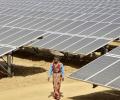
Shares of Waaree Energies and Premier Energies are under pressure after the US imposed initial duties on Indian solar imports. The article examines the impact on green energy stocks and market sentiment.

Ahead of President Vladimir Putin's visit to India for the BRICS summit, Russia has expressed support for New Delhi's peace initiatives to resolve the Ukraine conflict. Discussions between Putin and PM Modi will cover defence, energy, technology, and the repatriation of Indian nationals from the Russian military, alongside addressing trade and investment ties.
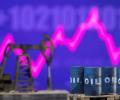
'If crude remains above $100 per barrel, with restricted retail-price increases, OMCs could face negative petrol and diesel marketing margins, higher LPG under-recoveries, higher crude-landing, freight and insurance costs, working capital and debt accumulation and inventory losses if crude subsequently corrects sharply.'

The rules require nuclear plant operators to maintain an insurance policy, financial security or a combination of both to cover civil liability for nuclear damage.
A Parliamentary Standing Committee on Commerce has urged the Indian government to swiftly conclude the proposed India-US Bilateral Trade Agreement (BTA), while ensuring India's interests are protected, recommending complete exemption for key export products like generic medicines and smartphones from future US tariff increases.
A bipartisan group of US senators has introduced a comprehensive bill imposing extensive sanctions on Russia, with India identified as one of five countries that could incur tariffs for its continued purchase of Russian oil.

US Vice President JD Vance and Prime Minister Narendra Modi held a phone call to discuss expanding the India-US comprehensive global strategic partnership, focusing on trade, defence, energy security, emerging technologies, and critical minerals. The discussion comes amidst rising tensions in West Asia and recent regional realignments, with both leaders reaffirming their commitment to strengthening cooperation.

'India is vulnerable to the West Asia crisis in three ways: Energy costs, the business Indian companies conduct in the region, and remittances from the Indian diaspora.'

A US lawmaker has criticized President Donald Trump's tariff policy on India for purchasing Russian oil, urging him to reverse it immediately.

Prime Minister Narendra Modi urged Russian President Vladimir Putin to move from 'endless war to the end of war' in Ukraine, emphasising that a peaceful resolution is humanity's shared priority.

Prime Minister Narendra Modi, addressing the BRICS summit, called for a fundamental shift in global governance, advocating for the replacement of the current 'pyramid of privilege' with a 'platform of partnership' where the Global South becomes a 'rule shaper' rather than a 'rule follower'.

'We have a very demanding electorate which expects us to do something. So we will have to do something which is a bit out of the ordinary while at the same time keeping in mind the risk factors.'
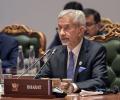
India has expressed serious concerns about the West Asia crisis and its potential impact on energy supplies and maritime stability, urging BRICS nations to find practical solutions to geopolitical challenges and unilateral sanctions.

The United States and India are on the verge of finalising a landmark bilateral trade deal, aiming to boost trade to USD 500 billion by 2030, according to US Deputy Assistant Secretary of State Bethany Poulos Morrison. The agreement seeks to open India's 1.4 billion-strong market to American goods on reciprocal terms, with ongoing high-level discussions to recalibrate the pact after recent changes in US tariff policy.

Reliance Industries (RIL) delivered a better-than-expected operational performance in Q1FY27, driven by a recovery in its oil-to-chemicals (O2C) business and robust gains in the telecom (Jio) segment, though its retail arm missed estimates. Analysts highlight the upcoming Jio Platforms IPO and execution in new energy and consumer businesses as key triggers for the stock's future growth.

India and the US have agreed to a trade deal that will see Washington reduce reciprocal tariffs on Indian goods from 25% to 18%, according to US President Donald Trump. The deal also includes commitments from India to reduce tariffs and non-tariff barriers against the US and to increase purchases of American products.

'Wages have not risen. Rural wages have stagnated. The growth was 0.7 per cent last year. For casual and irregular labour, the wage growth is negative.'

A 500 per cent tariff would effectively shut out India's goods and services exports to the US.

'A balance had to be struck between the economic cost of taking action at this point against the need not to fall behind the curve in controlling inflation and anchoring inflation expectations.'

'They talked bad about our leaders. They said India was a dead economy. They were not sensitive to the Indian psyche.'

India will now face a lower reciprocal tariff of 10 per cent, down from 25 per cent, after US President Donald Trump announced a new global levy on items imported into America in the wake of the Supreme Court verdict against his sweeping duties on several nations.

US President Donald Trump asserted that the trade deal with India remains intact despite a Supreme Court ruling against his tariffs, while also claiming he used tariffs to stop a war between India and Pakistan.

India's fair trade regulator, the Competition Commission of India (CCI), has dismissed a complaint alleging anti-competitive conduct against Reliance Jio Infocom Ltd and over 4,500 other firms across various sectors, citing a lack of specific evidence.
United States Senator Lindsey Graham on Sunday claimed that Indian Ambassador to the US Vinay Mohan Kwatra spoke to him last month about India buying less Russian oil and asked him to tell President Donald Trump to relieve the 25 per cent tariff.

Following a Supreme Court setback, Donald Trump has announced an increase in global tariffs from 10% to 15%, impacting international trade relations and raising concerns about economic repercussions.

In a veiled attack on US President Donald Trump, Canada's Minister of Energy and Natural Resources Tim Hodgson on Tuesday said India's free trade agreement with the European Union is a "perfect" answer to global hegemons that use tariffs and economic integration as tools of coercion.
The India-Oman free trade agreement, operationalised on June 1, is set to create significant export opportunities for India's labour-intensive and value-added sectors, including textiles, gems and jewellery, and marine products, while also strengthening energy security.
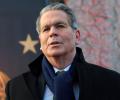
US Treasury Secretary Scott Bessent indicated a potential pathway to remove tariffs imposed on India for purchasing Russian oil, citing a significant decrease in such purchases. He also criticized Europe's approach and accused India of profiting from discounted Russian oil.
